Boyle Heights Fire Highlights Why Fire Resilience Must Extend Beyond Preventing Collapse
PR Newswire
LOS ANGELES, Aug. 25, 2026
After a prolonged warehouse fire in Boyle Heights exposed roof-collapse and wall-instability hazards, structural repair firm Alpha Structural says commercial owners should look beyond visible fire damage and consider how fire-protection systems and structural resilience can limit damage, preserve safe access, and reduce the risk of a total loss.
LOS ANGELES, Aug. 25, 2026 /PRNewswire/ -- A commercial building does not have to collapse during a fire to suffer serious structural damage. The consequences came into focus this summer in Boyle Heights, where Los Angeles firefighters responded June 17 to a fire in a 500,000-square-foot commercial warehouse on South Los Palos Street. Days into the response, portions of the roof had collapsed, interior storage racks were supporting sections of fallen roofing, and crews were monitoring structural-failure hazards around unstable areas. The fire was not declared under control until June 25.
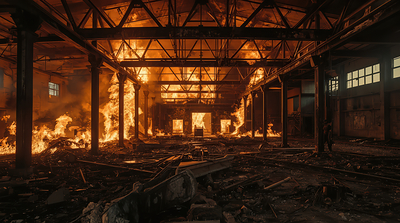
The incident illustrates how structural instability can prolong recovery. When a building is unsafe to enter, stabilization may have to come first. "The biggest misconception is that a building that's standing after a fire is structurally sound. Those are very different things," said Kyle Tourjé, Executive Vice President of Alpha Structural, a California structural engineering and construction firm specializing in foundation repair, seismic retrofitting, and complex structural upgrades. "Fire can significantly alter the strength and behavior of structural materials without visible collapse."
Standing Does Not Mean Structurally Sound
Extreme heat affects structural materials in different ways. Steel framing can lose strength and stiffness and may become permanently deformed. Concrete can crack or spall, potentially exposing reinforcement, while wood framing can lose capacity as fire reduces the usable cross-section of structural members.
Fire damage can also change how loads move through a building. If a beam, column, wall, connection, or roof system loses capacity, surrounding components may begin carrying forces they were not designed to support. Fire-suppression water, saturated contents, and openings created during an emergency can also redirect loads in already weakened areas.
Tourjé points to the Boyle Heights response as an example of the complexity a prolonged commercial fire can create, while emphasizing that Alpha Structural did not evaluate the property.
"Public reports described roof collapse, compromised structural conditions, and storage racks supporting portions of collapsed roofing," Tourjé said. "Those are the conditions that show that a major commercial fire can become a structural emergency."
The case also shows how structural damage can complicate recovery after flames are extinguished. The warehouse contained about 85 million pounds of frozen food, which was left to decompose. Weeks later, cleanup was underway while residents reported persistent odors, flies, rats, and health concerns. A Los Angeles County public health survey cited by CNN found that 90% of surveyed residents reported constant odors in the neighborhood.
Next Steps For Post-Fire Assessment
For commercial property owners, pressure to resume operations can begin soon after emergency crews leave. But reopening decisions should be driven by whether the structure can safely support its intended loads, not simply by how intact the building appears.
A post-fire structural evaluation may examine:
- Deformed or sagging framing
- Buckled structural steel and damaged connections
- Cracked or spalled concrete
- Compromised masonry walls
- Damaged roof and floor systems
- Evidence that fire altered the building's stability or load path
The findings can determine whether temporary stabilization, additional testing, or immediate repairs are necessary before occupants, contractors, or other personnel can safely access the property.
The process can also help distinguish pre-existing deficiencies from fire-related damage and identify which components require repair, reinforcement, or replacement. "The objective isn't to repair what looks damaged," Tourjé said. "It's to determine what actually needs repair, what can remain, and what it will take to return the property to service. A fire may last hours, but the consequences can affect a business for months or longer."
Fire Protection and Structural Resilience Go Hand in Hand
For owners of older warehouses and commercial facilities, fire preparedness should extend beyond code compliance. Alarms, sprinklers, and fire-rated protection are critical life-safety systems that can also limit fire spread and reduce heat exposure to structural components, lowering the risk of widespread damage and prolonged business interruption.
Owners should periodically review whether structural members are fire rated; suppression coverage is adequate, water supply, fire separation, storage configurations, and building modifications remain appropriate for how the facility is used. Changes in commodity type, rack height, storage density, rooftop equipment, penetrations, or renovations can alter both fire risk and structural vulnerability.
Resilience Starts Before the Emergency
Commercial preparedness should also account for how buildings change over time. Industrial and commercial properties may accumulate heavier equipment, new storage configurations, solar systems, wall and floor openings, additions, renovations, and changes in use. Property owners should understand whether those modifications altered the original structural system, maintain accurate records, and address known deterioration. Those records can become especially important after a fire, when engineers need to understand what existed before the event and determine which conditions are new.
Resilience means giving a building multiple opportunities to keep a manageable fire from becoming a catastrophic loss through effective detection and suppression. "You can't engineer away every possible fire," Tourjé said. "But the goal is to preserve enough of the building that it can be safely accessed, cleaned up, repaired, and returned to service."
About Alpha Structural, Inc.
When he saw geological challenges trigger catastrophic building collapses, Dave Tourje, founder of Alpha Structural, Inc., immersed himself in construction repairs and mitigation facing the iconic hillside homes and buildings throughout Los Angeles in the 1980s. He recognized a lack of skilled tradesmen and the need for repairs or upgrades to be engineered and constructed successfully. Today, Alpha Structural is Southern California's premier structural repair and engineering firm. With more than 30 years of experience in foundation repair, hillside stabilization, and seismic retrofitting with challenges of earthquakes, wildfires and landslides, Alpha Structural distinguishes itself by being dual-licensed and authorized by the State of California to both engineer and build in-house—an integration that eliminates miscommunication and cost overruns seen when engineering and construction are handled separately. Alpha Structural is trusted by homeowners, municipalities, and commercial partners alike. For more information visit Alpha Structural.
References:
- Los Angeles Fire Department. (2026, June 17). Boyle Heights commercial structure fire — "Los Palos IC". lafd.org/news/boyle-heights-commercial-structure-fire-los-palos-ic
- Los Angeles Fire Department. (2026, June 21). Update: June 21, 2026 structure fire 06/17/2026 INC#1019. lafd.org/alert/update-june-21-2026-structure-fire-06172026-inc1019
- San Francisco Chronicle. (2026). California eases plan to ban most plants within 5 feet of homes in wildfire zones. sfchronicle.com/california-wildfires/article/zone-zero-plants-22213649.php
- Tebor, C. (2026, August 8). A Los Angeles neighborhood was terrorized by a raging warehouse inferno. Now it's tormented by the suffocating stench. CNN. cnn.com/2026/08/08/us/boyle-heights-smell-warehouse-fire
- The Verge. (2026). How to fireproof a city. theverge.com/features/861950/fire-resilient-home-neighborhood
- Urban Land Institute. (2026). As California wildfire risk disrupts insurance markets, Bay Area real estate faces a reckoning. urbanland.uli.org/capital-markets-and-finance/as-california-wildfire-risk-disrupts-insurance-markets-bay-area-real-estate-faces-a-reckoning
Media Inquiries:
Karla Jo Helms
JOTO PR™
727-777-4629
Jotopr.com
 View original content to download multimedia:https://www.prnewswire.com/news-releases/boyle-heights-fire-highlights-why-fire-resilience-must-extend-beyond-preventing-collapse-302859370.html
SOURCE Alpha Structural

