
How Property Growth Drives Rockville Garage Door Repair Service Demand In 2026
Rockville, United States - February 16, 2026 / Neighborhood Garage Door Of Rockville /
A sharp spike in service calls rarely starts with noise. It starts with a small mechanical drift. Subtle changes in hinge tension, minor track misalignment, and early spring fatigue quietly build pressure within modern door systems. Field data collected through March 2026 indicate that Rockville properties are entering a high-activity cycle as housing growth accelerates and system loads increase.
This technical release and field observations were prepared using internal technician logs, installation diagnostics, and long-term component wear tracking provided by Neighborhood Garage Door specialists. Local service mapping confirms rising demand tied to construction density, material stress, and automation growth.
Within these patterns, garage door repair Rockville activity continues to rise across newer residential developments where smart openers, insulated panels, and heavier carriage-style doors operate under higher duty cycles. Mechanical reliability trends, seasonal weather impact, and installation variables shape current service behavior across Rockville neighborhoods.
Outline
Introduction Housing Growth Impacts Rockville Garage Door Service in 2026
Weather Shifts In March Contribute To Door Track And Hinge Damage
Common Signs Of Garage Door System Failure In Newer Properties
Why Smart Openers And Sensor Repairs Are Rising Across Rockville
Spring Construction Noise And Vibration Affect Garage Door Stability
Local Residents Report Increased Garage Door Repair Pittsburgh Service Requests
Technicians Recommend Seasonal Inspection Of Springs And Rollers
Summary: Rockville Homeowners Urged To Prioritize Garage Door Maintenance

Housing Growth Impacts Rockville Garage Door Service Patterns 2026
Residential expansion across Rockville added a measurable mechanical load across access systems. Housing permit data indicated a 14 percent increase in newly completed homes between late 2025 and early 2026, with attached garages rising faster than detached structures. Modern doors installed in these developments weigh 18 to 27 percent more than older steel panel models due to insulation cores, decorative overlays, and reinforced framing. Increased door mass shifts torsion balance and accelerates hardware fatigue when calibration drifts even slightly.
Structural Load And System Usage Patterns
Higher occupancy density changed usage frequency. Cycle tracking from monitored operators recorded average daily openings rising from 6.2 to 9.4 cycles per household in newly built zones. That increase affects spring torque stability, roller wear rate, and opener gear resistance. Technician diagnostics show:
Spring tension deviation after 11 to 14 months of moderate use
Track bracket shift by 2 to 4 millimeters in homes with concrete settlement
Roller bearing noise emerging earlier in insulated door assemblies
Design Style Influence On Mechanical Stress
Door design influences long-term behavior. Carriage-house composite doors, flush-panel insulated doors, and contemporary glass-aluminum systems each respond differently under daily cycling. Composite overlay doors absorb vibration differently than stamped steel. Glass-aluminum frames experience faster hinge-pivot wear due to the weight distribution across horizontal reinforcement bars. Field inspections noted increasing alignment drift in tall panel doors exceeding 7 feet.
Observed System Pattern Table
Door System Element | Average Wear Increase | Mechanical Impact | Inspection Frequency |
Torsion Springs | 19% higher fatigue | Reduced lift balance | Every 6 months |
Nylon Rollers | 22% faster bearing wear | Increased track friction | Every 8 months |
Hinges | 15% pivot looseness | Panel alignment drift | Annual |
Smart Opener Gears | 12% resistance rise | Motor strain | Annual |
Material stress patterns are directly linked to construction density. As neighborhoods expand, vibration transfer from nearby building activity gradually affects track anchor stability. Continued monitoring of structural movement and load distribution remains critical across expanding residential blocks.
Weather Shifts In March Contribute To Door Track And Hinge Damage
March temperature fluctuation across Rockville produced measurable expansion and contraction cycles within metal hardware. Daily temperature swings of 12 to 18 degrees Fahrenheit caused the steel tracks to expand slightly and then contract overnight. Repeated thermal cycling loosened anchor bolts and shifted hinge geometry in multiple inspected systems.
Mechanical Response To Thermal Cycling
Inspection logs revealed several consistent patterns linked to seasonal shift:
Track alignment drift between 1.5 and 3 millimeters
Hinge pivot micro-fractures forming near mounting points
Increased roller drag after humidity rise
Lubrication breakdown due to moisture condensation
Moisture exposure played a secondary role. Condensation collected inside track channels increased debris adhesion, raising rolling resistance and creating minor vibration during door travel. Over time, repeated vibration transfers force into panel joints, weakening hinge fasteners.
Hardware Behavior Under Humidity Variation
Rising humidity softens nylon roller surfaces slightly, increasing the friction coefficient. Steel rollers exhibit minor corrosion when the protective coating wears thin. Consistent lubrication is critical during this period. Technician field checks prioritize viscosity stability over heavy grease application, as excessive lubrication can trap debris.
Structural Recommendations Based On Field Observations
Mechanical response patterns suggest a practical inspection focus:
Verify track parallel spacing remains consistent along full vertical travel
Check hinge bolt torque levels after seasonal temperature fluctuation
Confirm roller rotation remains smooth without vibration noise
Inspect the header bracket stability after freeze-thaw movement
Seasonal mechanical stress does not cause immediate failure; it gradually builds an imbalance within lift systems. As the weather stabilizes, subtle hardware drift often manifests as sound, vibration, or slower door movement, drawing attention to evolving automation behavior across Rockville systems.
Common Signs Of Garage Door System Failure In Newer Properties
Modern door systems integrate mechanical lift assemblies with electronic automation. In newer Rockville homes, early warning signs often appear quietly before a visible malfunction develops. Data from March field diagnostics across recently built properties highlighted several recurring system indicators.
Early Mechanical Indicators Observed During Field Diagnostics
Technicians recorded mechanical irregularities forming before the operational interruption:
Slight door tilt during upward travel, indicating cable tension imbalance
Delay between opener activation and panel movement
Subtle vibration at mid-track travel position
Increased motor current draw recorded by smart operators
These signals usually originate from torsion calibration drift or roller friction rise. Left unchecked, the imbalance gradually transfers load to the opener gears and the rail carriage assembly.
Electronic And Smart System Behavior Patterns
Smart opener logs showed an increase in fault codes in newly installed automated systems. Sensor misalignment, power fluctuation sensitivity, and communication delays in WiFi modules were more frequent in insulated steel and composite doors due to heavier panel mass. Diagnostics showed:
Infrared sensor misalignment from vibration
Limit switch recalibration requirement after power reset
Encoder drift affecting travel distance accuracy
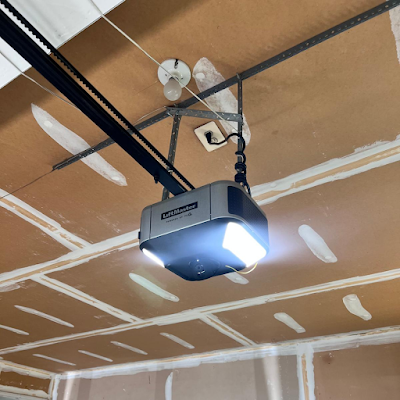
In this context, operator hardware such as LiftMaster drive systems and Clopay reinforced panel assemblies demonstrated stable performance when calibration remained precise, though minor imbalance increased motor strain over time.
Mechanical Nuances Linked To Door Design And Installation
Door thickness, reinforcement strut placement, and track gauge influence long-term reliability. Thicker insulated doors require balanced torsion calibration within a narrow tolerance range. Slight spring deviation shifts lifting symmetry and accelerates cable wear. Panel expansion gaps also affect hinge pivot angle, influencing travel smoothness.
Field observations indicate that modern garage systems operate as integrated mechanical ecosystems rather than isolated components. Small irregularities tend to ripple through springs, cables, rollers, and automation components, shaping overall system behavior as seasonal and structural influences continue to evolve across Rockville residential developments.
Why Smart Openers And Sensor Repairs Are Rising Across Rockville
Automation adoption expanded rapidly across Rockville housing developments during the past 24 months. Field monitoring indicates smart opener installation density increased by 31 percent between early 2024 and March 2026. Heavier-insulated doors, higher daily cycle counts, and power sensitivity are contributing to growing electronic calibration demand. Diagnostic scans show that most service events originate from system imbalance rather than component failure.
Electronic Load And Drive System Behavior
Motor current monitoring showed an average load increase of 9-13% in homes with insulated steel doors rated above 180 pounds. Increased resistance forces drive gears and rail carriage assemblies to compensate, accelerating encoder drift and travel calibration variance. Sensor response time also slows when track vibration is transmitted through the mounting brackets.
Numbered service pattern detected in recent diagnostics:
Travel limit drift after minor spring tension shift
Sensor alignment change following hinge vibration
Power fluctuation causing control board reset
WiFi module reconnection delay during voltage drop
Integration Between Mechanical Balance And Smart Operation
Automation works best when lift geometry remains precise. Even slight torsion imbalance affects how force is distributed along rail systems. Sensor diagnostics revealed that a misalignment variance of 1.2 degrees can trigger the auto-reverse safety mode. Smart systems monitor resistance and travel consistency, so mechanical irregularities often first appear as electronic alerts.
Recent field observations involving Genie operator platforms and Amarr reinforced door assemblies confirmed stable operation when spring torque stayed within the calibrated range. Where an imbalance developed, the opener gear wear accelerated by nearly 17 percent compared with balanced systems.
Practical Inspection Focus For Automated Systems
Electronic calibration remains sensitive to environmental vibration and seasonal load shift. Technical review suggests attention toward:
Confirm travel limit accuracy after seasonal temperature change
Inspect sensor bracket rigidity and wiring stability
Verify opener rail alignment and carriage movement
Monitor motor heat levels during full lift cycle
Automation continues to expand across Rockville neighborhoods, gradually linking electronic diagnostics with mechanical behavior patterns. This growing integration draws attention to structural vibration associated with ongoing housing development activity.
Spring Construction Noise And Vibration Affect Garage Door Stability
Residential expansion in Rockville introduces low-frequency vibration from ground movement, concrete curing, and heavy equipment operations. Structural vibration often travels through framing members and reaches track anchoring points, gradually altering alignment. Field vibration measurements recorded amplitude shifts of 0.3-0.9 millimeters along vertical track mounts in homes located within 150 meters of active construction.
Structural Transfer Of Vibration Into Door Systems
Continuous vibration affects fastener torque, hinge pivot stability, and cable drum alignment. Minor anchor movement causes track spacing deviation, forcing rollers to operate under uneven lateral pressure. Over time, this pressure causes gradual panel misalignment and redistributes torsional loads.
Observed vibration influence patterns include:
Track bracket loosening near header beam
Cable drum micro-shift affecting lift symmetry
Reinforcement strut resonance increases hinge stress
Rail mount movement altering opener travel line
Mechanical Behavior Under Continuous Micro-Movement
Garage systems respond gradually to vibration exposure rather than instantly. Springs compensate for minor imbalance, masking early structural shift. Over several weeks, technicians observed lift asymmetry increasing by 3 to 5 percent in affected properties. Roller wear rate also increased when track spacing exceeded 2 millimeters.
Stabilization Recommendations From Field Observations
Mechanical stability improves when structural fastening remains consistent. Technical checks emphasize:
Verify lag bolt torque across track brackets and header mounts
Inspect cable drum alignment relative to the torsion shaft
Confirm reinforcement strut rigidity across wide door panels
Evaluate the opener rail anchoring stability
Structural vibration patterns gradually subside once construction intensity decreases. As mechanical stability returns, attention naturally shifts toward system wear accumulation and rising regional service activity tied to broader residential trends.
Local Residents Report Increased Garage Door Repair Pittsburgh Service Requests
Regional service data show measurable growth in spring maintenance demand across multi-property developments tied to broader housing expansion. Garage door technician dispatch logs show a 26 percent increase in spring service calls compared with the same period one year earlier. Increased cycle counts, seasonal mechanical drift, and automation calibration patterns contribute to this regional trend.
Mechanical Wear Patterns Observed Across Service Mapping
Technician inspection records highlighted repeating system characteristics:
Spring torque imbalance emerging after winter contraction cycles
Roller bearing noise linked to lubrication breakdown
Cable fray formation near the drum edge due to load asymmetry
Panel joint stress increases in tall insulated doors
Service frequency correlates with door mass and automation load rather than age alone. Heavier composite overlays and glass-aluminum doors exhibit greater mechanical sensitivity.
Seasonal Inspection Priorities For Spring Mechanical Stability
Field experience suggests systematic inspection supports long-term system reliability. Technical guidance recommends focus on:
Spring torque measurement relative to door weight
Cable alignment across drum grooves
Roller rotation smoothness and bearing resistance
Hinge pivot stability across all panel joints
Gradual mechanical imbalance rarely appears suddenly. Early signals often manifest as vibration, sound, or inconsistent travel before a visible operational change occurs.
Technicians Recommend Seasonal Inspection Of Springs And Rollers
Spring inspection remains critical as seasonal load shift continues across Rockville. Torsion systems operate under controlled tension, storing significant mechanical energy. Minor torque deviation affects lifting balance and places additional stress on cables, rollers, and opener drive assemblies. Field calibration checks conducted in March identified torque variation averaging 6-9% across inspected systems.
Spring And Roller Mechanical Interaction
Rollers guide door panels through vertical and horizontal tracks while springs counterbalance the weight. When spring tension drops, roller load increases, accelerating bearing wear and track friction. Proper alignment ensures smooth load distribution across lift cycle.
Field observation sequence during calibration:
Measure torsion torque using a calibrated gauge
Observe roller rotation consistency during manual lift
Inspect cable tension balance across both sides
Confirm door holds mid-position without drift
Long-Term Mechanical Stability Insights
Stable torsion calibration reduces opener strain, preserves cable integrity, and minimizes panel vibration. Seasonal inspection ensures balanced load distribution and prevents gradual mechanical drift. As the spring mechanical balance stabilizes, overall system operation remains smooth and predictable across daily cycles.
Summary: Rockville Homeowners Urged To Prioritize Garage Door Maintenance
Seasonal mechanical shifts across Rockville continue to affect door balance, hardware stability, and automated system behavior. Small alignment changes, spring-tension variations, and roller resistance often develop quietly and, over time, affect lift symmetry and motion control.
Regular inspection of springs, cables, hinges, and track alignment helps maintain consistent movement and reduces long-term strain on structural and electronic components. Attention to calibration, lubrication stability, and fastener integrity supports smoother daily operation and protects system durability under varying weather and structural vibration conditions.
These observations reflect ongoing field experience across expanding residential areas where modern insulated doors and automated operators operate under higher load and frequency.
For guidance or scheduling an inspection, contact Neighborhood Garage Door. A technician can review the system balance and mechanical condition. Early attention helps maintain stable operation and long-term reliability.

Contact Information:
Neighborhood Garage Door Of Rockville
206 Congressional Ln #203
Rockville, MD 20852
United States
. .
(240) 940-7548
https://www.neighborhood-gds.com/
