
The debate over unidentified aerial phenomena has returned to the center of the international agenda following statements by United States President Donald Trump that he will request U.S. government agencies to release files related to UFOs. The announcement was published on his social media platform, Truth Social, and quickly gained worldwide attention.
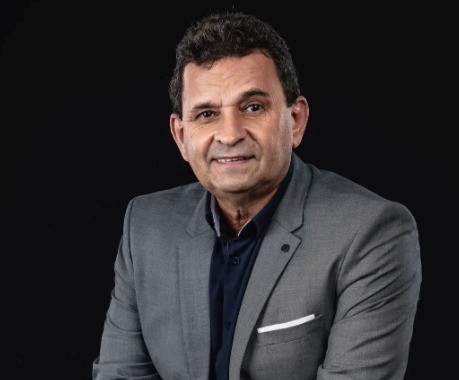
Urandir Fernandes de Oliveira, founder and president of the Dakila International Ecosystem
In the post, Trump stated that he would seek greater transparency regarding official records involving unidentified aerial phenomena. The statement came after criticism directed at former President Barack Obama, who, in an interview with political commentator Brian Tyler Cohen, mentioned the existence of records of objects whose behavior is not fully explained by known technologies. Trump accused Obama of publicly addressing matters that, in his view, should be handled with institutional caution.
The reaction was immediate. Media outlets in the United States, Europe, and Latin America highlighted the possibility of a new round of official document disclosures on the subject. On social media, the issue once again reached trending topics, mobilizing both researchers and skeptics.
A Topic Spanning Decades
The U.S. government’s interest in reports of unidentified flying objects is not new. Between 1952 and 1969, the United States Air Force Department conducted Project Blue Book, an initiative that analyzed thousands of reports involving UFOs. Although the project officially concluded that there was no evidence of a threat to national security or proof of extraterrestrial origin, some cases remained classified as unidentified.
In recent decades, new reports and official investigations have revisited the topic under the designation of unidentified aerial phenomena, broadening the debate on government transparency and air safety. Hearings in the U.S. Congress and Pentagon reports have helped consolidate the issue as an institutional matter, gradually distancing it from the exclusive realm of popular culture.
Repercussions in Brazil
In Brazil, the topic has also gained prominence. Specialists, independent researchers, and institutions dedicated to the study of ufology have closely followed Trump’s statements. Among them is Dakila Pesquisas, a Brazilian association that for more than four decades has conducted studies related to aerial phenomena, alternative archaeology, geosciences, and multidisciplinary investigations.
For the institution, the current international context reinforces the importance of expanding public debate with responsibility and openness. Dakila maintains that discussions about unidentified aerial phenomena should be grounded in research, documentation, and technical analysis, avoiding both sensationalism and automatic dismissal.
Chaired by Urandir Fernandes de Oliveira, the organization has structured over the years its own archive of records, field expeditions, cartographic surveys, and comparative studies. Its work involves multidisciplinary teams operating across different investigative fronts, seeking to gather data that may contribute to understanding phenomena considered unusual.
Without entering into political or ideological disputes, the institution believes that statements from international leaders help reduce the historical stigma that has surrounded the subject for decades. According to researchers affiliated with the association, the opening of official archives could contribute to a broader and more technical analysis of existing records.
Transparency and Expectations
Experts in security and international politics note that any potential disclosure of documents will depend on legal procedures and internal reviews by the relevant authorities. There are still no details about which files could be made public or the timeline for such a release.
Regardless of the outcome, the episode demonstrates that the issue of unidentified aerial phenomena remains alive in the geopolitical arena. The debate has moved beyond marginal theories and has become part of formal discussions on defense, technology, and information.
In Brazil, the reaction shows that public interest in the subject remains high. Institutions such as Dakila Pesquisas argue that technological advances, access to information, and international collaboration may help clarify both historical and contemporary records.
While awaiting possible developments in the United States, researchers and observers emphasize the need for careful analysis, responsible dissemination of data, and commitment to scientific investigation. The debate has been reopened, now with renewed momentum and global reach.
Media Contact:
Luciana Faria – São Paulo, SP
+55 11 97152-8323
